


Does My Business Need an Elevator?
Blog submitted by Kelley Frake. Published on 03/11/2026.
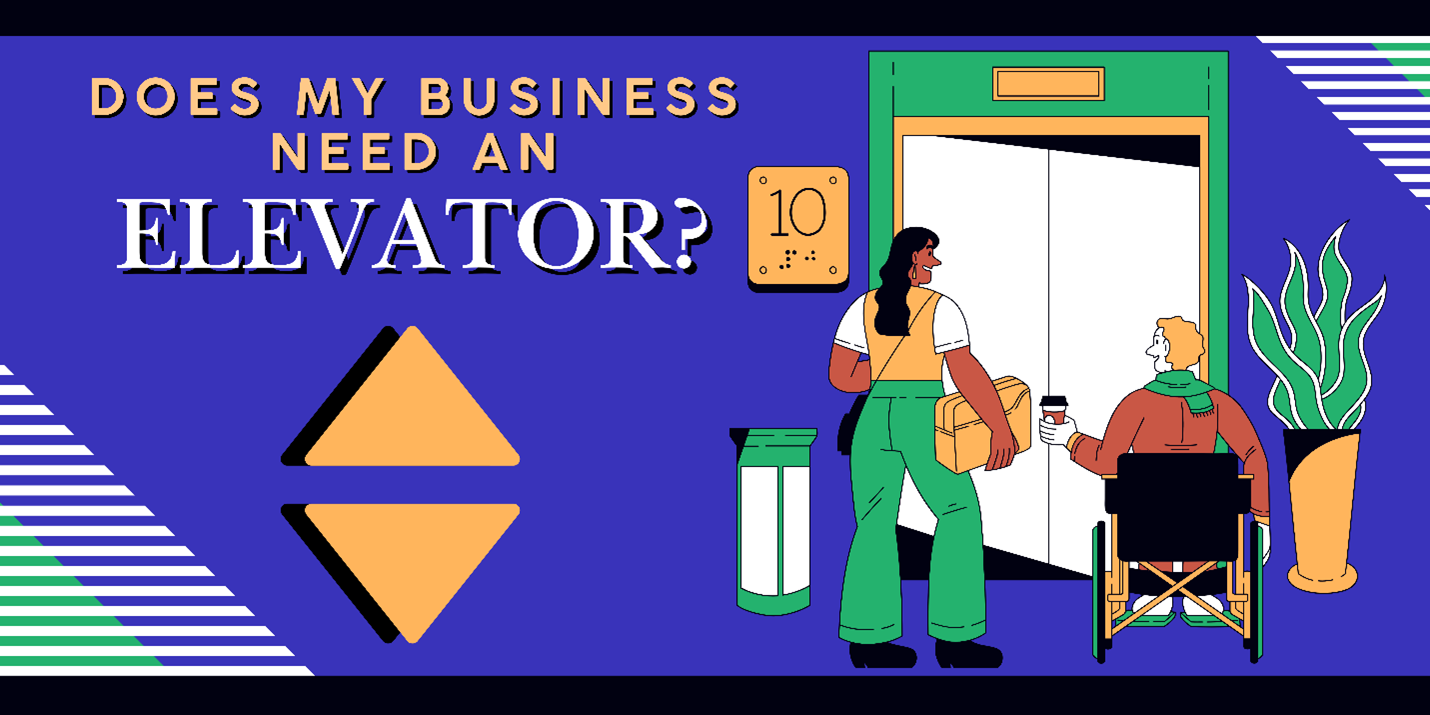
"Elevators are a crucial part of making multistory buildings accessible to people with mobility disabilities, but also to providing safer independent access for our aging population. If you have the ability to add an elevator, it's a great way to make your building more accessible and welcoming to all."
Christy Vanek | Director, Global Disability Accommodations & Accessibility, Otis Worldwide Co.
Under the ADA, having an accessible way to get from point A to B is a must, but what happens when you start to add basements, multiple stories, and mezzanines? The world we live in is not a flat one which means providing vertical access is often an important part of accessible routes.
Ground Floor - Accessible Routes
In new construction projects for ADA Title III businesses, non-profits, commercial facilities and other places of public accommodation covered by the 2010 ADA Standards, at least one accessible route must connect arrival points to the accessible spaces and features of a site. Arrival points can include parking lots, bus stops, sidewalks and other ways people use to access the site.
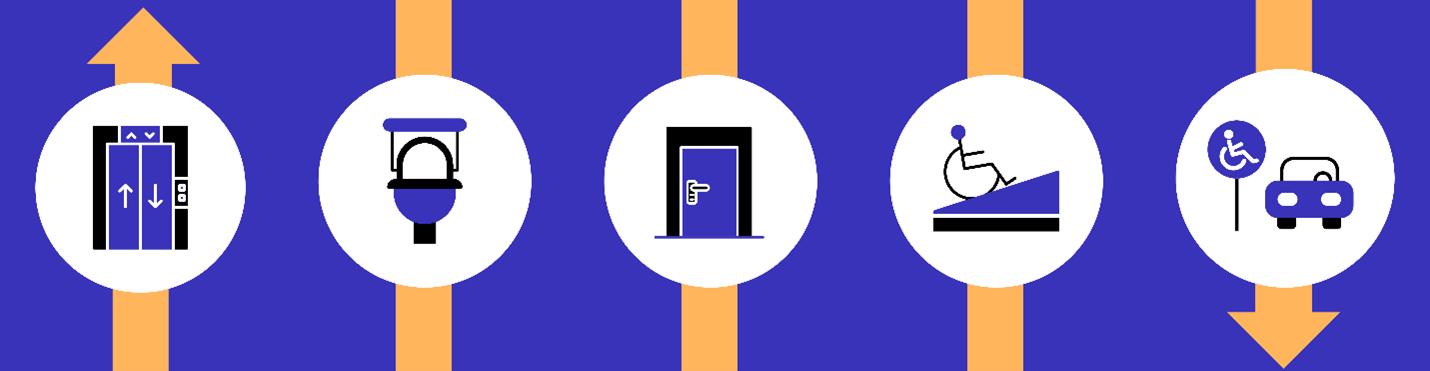
Think of an accessible route as a continuous, unbroken line: a person with a disability, like a wheelchair user, should be able to follow this line to the accessible areas of the facility without encountering barriers that block their access.
Whenever possible, accessible routes should be part of the main route used by everyone. At minimum, they should be in the same area as the main route and not isolated somewhere like the back of the facility. Accessible routes should also offer an equal experience to people with disabilities. For example, if the main route is indoors, the accessible route must be indoors as well. Don't make people with disabilities travel outside in the rain while everyone else gets to stay dry!
Going Up - Vertical Access in Multi-Story Buildings
Elevators are the most common way of providing vertical access under the Standards. In some cases, other methods-such as limited-use/limited-application (LULA) elevators or platform lifts-can be used when an elevator is not required or feasible:
- LULA Elevators: Smaller and designed for shorter distance travel than commercial elevators (i.e. travel between two floors).
- Platform Lifts: Can be designed to move vertically or run along existing stairways. If you are integrating a lift into an existing staircase, be sure you are using a platform lift and not a chairlift. Chairlifts require a person to transfer out of their mobility device and leave it behind. This creates a whole other issue once the person reaches the top of the stairs without their device.
The U.S. Access Board has stated that "freight elevators" cannot be used to meet the accessible passenger elevator requirements of the ADA. However, "service elevators" that move passengers as well as freight can be used if they meet the ASME criteria for passenger elevators and the 2010 ADA Standards.

Determining if a facility needs to have vertical access under the ADA often depends on whether it is new construction or an older facility undergoing alterations:
New Construction
In private-sector facilities built after the ADA Standards went into effect, accessible routes must connect each story and mezzanine in a facility unless an exception applies.* For single story facilities with a mezzanine, an accessible route is not required to that level because a mezzanine does not count as a story on its own.
An accessible route may be required to a basement or other level below grade if it meets the Standard's definition of a story (i.e., it is designed for human occupancy and equipped with features like lighting, ventilation, and means of egress).
*Note: Contractors of state and local governments should be aware that public-sector (state and local government) facilities will have fewer exceptions for providing vertical access under the Standards. In some instances, these additional requirements can extend to private-sector facilities when they are providing programs, services or activities on behalf of a state or local government.
Exceptions for Private-Sector Facilities
A facility does not need to provide vertical access in new construction if:
- it is less than 3 stories, or
- it has under 3,000 square feet per story.
These exceptions do not apply to:
- shopping centers or malls with 5 or more sales or rental establishments,
- the professional offices of health care providers, or
- public transit facilities or airport terminals.
If a building qualifies for an exception:
- All other accessibility requirements still apply to floors with no accessible route.
- Elevators provided anyway must comply as either standard or LULA elevators.
- Vertical access may still be required under state or local code.
Alterations
In existing facilities built before the ADA Standards went into effect, adding an elevator is usually not required during alterations. However, vertical access in alterations can be required when:
- a stair or escalator is built where none existed before and major structural modifications are necessary (§206.2.3.1), or
- an accessible route is required as part of an accessible path of travel to primary function areas that are altered or added (§202.4).
"Primary function areas" are spaces where the main activities of a facility take place.
It's important to note that the new construction exceptions like the two-story and 3,000 square foot limit would also apply to alterations and additions. However, vertical access may still be required under state or local code even if the ADA does not require it.
Top Floor - Prioritizing Access
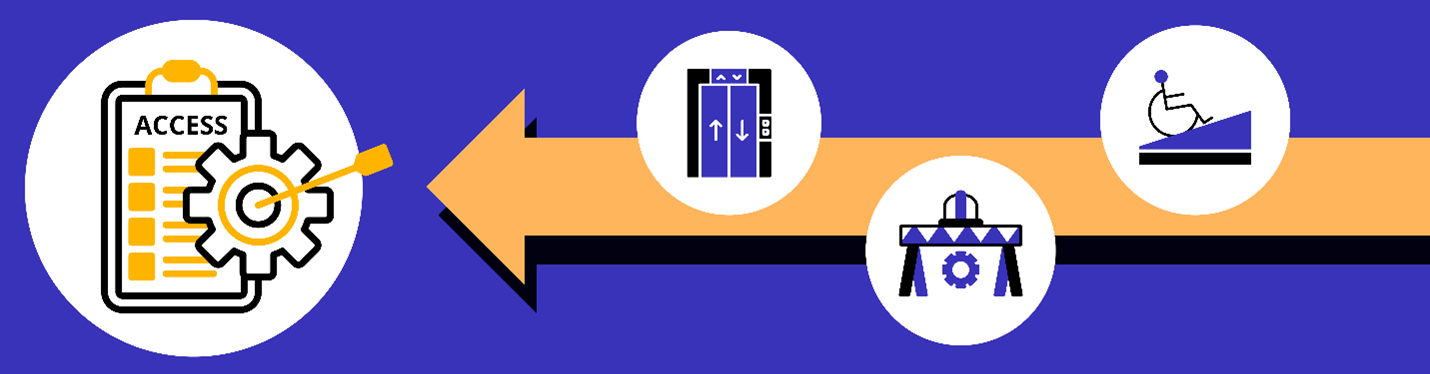
Even if a facility fully complies with the 2010 ADA Standards, this is only a starting point. Title III businesses and other public entities still have an obligation to make reasonable modifications to their policies, practices or procedures when necessary to avoid discrimination. They are also required to remove physical barriers when it is readily achievable.
Example: If a store's returns desk is on the second floor, the business could modify their policy to allow a wheelchair user to process returns at the registers on the first floor.
Businesses are not required to provide modifications that would fundamentally alter the nature of their business.
Example: If a business closes their second floor an hour before closing to send half of their staff home, they would generally not have to reopen or allow purchases from this floor for a customer with a disability if they do not provide this to customers without disabilities once it is closed. This request could be considered a fundamental alteration of their store hours.
That being said, a business should make good faith efforts and engage with customers to find a solution that works if the initial request would result in a fundamental alteration.
Methods used to provide access need to be balanced between the needs of the person with the disability and the practical limitations of the business. At the end of the day, prioritizing equal access for people with disabilities is the goal but how you get there is just as important.
Important Disclaimer: This blog focuses on Title III of the ADA and the 2010 ADA Standards. State or local jurisdictions which have adopted later versions of the International Building Code (IBC) or have passed additional legal requirements may have more stringent rules for vertical access. Readers are encouraged to consult with their applicable state or local building code officials as they generally must comply with whichever law contains the more stringent requirements.


